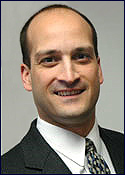
John Tonello
Contribute
Please consider a donation of support to our campaign. Each dollar helps us get out our message of unity and vision for Elmira!

|
Issues
Be sure to visit the Newsroom for the latest announcements and policy statements.
|
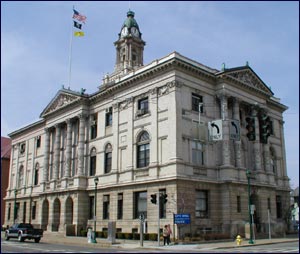
Elmira City Hall, corner of Church and Lake streets.
|
Tonello's platform calls for comprehensive approach to growing Elmira
Read my comprehensive array of ideas and specific solutions for Elmira. I cover issues from public safety and job growth to downtown development and fiscal responsibility. Read more
Why do you want to be mayor?
I thought long and hard about my decision to run for mayor of Elmira and decided I really had just two choices: I could sit on the sidelines and let things continue as they are or I could step in, share my ideas, and try to bring about positive change right now. I talked with many people, and they told me they don't want to wait for more people to move away, more businesses to pull up stakes or overlook us, or more urban blight and crime to stain and obscure our city. I share their feelings and I'm willing to challenge the status quo to give all Elmirans a choice. Elmira has a strong, proud history, and I'm not willing to let its decline pass as a foregone conclusion. I want to make Elmira better, I want to help the city grow, and I want to be a driving force in Elmira's resurgence.
What experience do you have to be mayor?
I have lived in the Southern Tier for most of the past 25 years. I graduated from Corning-Painted Post West High and Corning Community College before going on to earn a bachelor's degree in journalism from Syracuse University. I returned to this area 10 years ago because of a great job opportunity, and I bought my first home on Near Westside seven years ago. Though my career has since taken me to Cornell University, I have stayed in Elmira because I love the people here and all the city has to offer. As a resident, I understand the issues of the city and how they play in all our neighborhoods. My work experience is diverse, and has a central theme: change and innovation. As a former newspaper reporter and editor who covered city and county government, I understand the business of government. In fact, it was my job to make sure others understood it, too. As a former Web developer and technology consultant, I understand how innovation and risk-taking can pay off. As a manager at Corning Inc., Gannett Co., Accenture, and now at Cornell University, I learned how to lead, innovate, and motivate.
To me, the No. 1 job of the mayor is to communicate and reach out to people in the community, turn ideas into actions, and encourage others to do the same. I believe my background is well suited to do just that:
- More than eight years of experience in management positions for such Fortune 1000 companies as Corning Inc., Accenture, Gannett Co.; and for Cornell and Syracuse universities
- Eighteen years of combined experience as a journalist and communications professional
- Ten years of experience implementing technology innovations for universities, and large and small businesses, including World Kitchen and The Wall Street Journal
- A bachelor's degree from Syracuse University, and MBA coursework at RIT
|
I have seven primary themes:
Vision
Focus on the future and where we want to be as a city
Optimism
Change our philosophy from "we can't" to "we can"
Neighbors helping neighbors
Bring together disparate, disenfranchised groups to solve problems
Quality of life
Focus on those things that make living in the city better and more appealing
Accountability
Make city government more transparent, accessible, and open
Innovation
Seek, find, and employ new solutions
Risk-taking
Encourage those with courage to try new ideas
|
|
What are your campaign themes?
Vision. Let's look at the big picture and act accordingly. We've been very good at tearing things down without a clear idea of how to build them back up. I want to add rhyme to our reason so each step of our urban renewal is part of a longer journey. I have a two-year plan that begins that process.
Optimism. When someone walks down Main Street and feels it's OK to litter, or if the city lets streets crumble, or if we ignore urban blight, it says we've lost respect for our city. I want to find ways to turn Elmira around and start by encouraging young people to buy homes here and businesses to give us a second look.
Neighbors helping neighbors. I believe we, as a city, have lost sight of our future because we have lost sight of each other. We are divided by fuzzy political boundaries that have come to define us. Instead of identifying ourselves as Elmirans, we see ourselves as Westsiders, Southsiders, Northsiders, Eastsiders, and Downtowners. As rich, as poor, as haves and have-nots, as Democrats and Republicans. I want to encourage cooperation and put together commissions of private citizens and business people that enable us to easily reach out to each other. To me, it's about finding ways to unite people, not divide them.
Quality of life. The things that matter most to residents of Elmira are the things that matter to me -- public safety, well-maintained roads and sidewalks, effective code enforcement, access to services, and all those things that brought us to the city in the first place. I also want to look at city ordinances, codes and laws to make sure we're doing all we can as a city to encourage people to buy property or live in Elmira.
Accountability. Nature abhors a vacuum and so does an open democracy. As mayor, I intend to make city government more transparent, accessible, and open to the city's residents and its media. I will encourage open debate on issues and go farther than mere public hearings by reaching out to community groups, neighborhood associations, the media, and businesses to spur dialogue. If you have an issue, whether it's a pothole, an insight into something pending before the council, or a concern about a budget that affects your tax rate, I want to hear from you.
Innovation. We must think of creative new ways to solve our problems and look for ways that don't rely on government alone. Innovation means we're open to new ideas, we're not afraid to try new things, and we're hungry for ways to improve all we do. Good ideas come from unexpected places and from people far from City Hall. As mayor, I will be relentless in my hunt for innovative solutions to Elmira's problems.
Risk-taking. If we want to reawaken our community, we must be willing to take some risks, risks that don't put our financial future in doubt, but risks that show that we believe in the city and its potential. If we're willing to put our money where our mouths are, investors will be, too.
Isn't the city improving already?
Yes, but I think we're still missing the big picture. For example, in 1993, Elmira's Common Council passed a law requiring top city managers to live within the city. As of February 2005, many still did not. I'm not out to blame these individuals or reprimand them. Nor am I talking about enforcing the law or repealing it. To me, that's not the issue. The big picture issue is why do we need a law to force city employees and managers to live here? Why don't these people say, "Hey, this is a great place to live. I want to buy a house here. I want to live here." That's what we must overcome, not piecemeal, but with a broad vision.
How do you plan to make people want to live here?
To me, it's all about quality of life. If you feel safe, and have ready access to the services you want and need -- everything from affordable groceries to childcare -- and you can purchase property with the confidence its value will hold fast or increase, you'll consider urban living. We need to work on those things. We also need to forge closer ties with Elmira City Schools because great schools and great cities go hand in hand. Finally, we need to reduce the risk for investors and provide new incentives to rich and poor; the young and old. Together, these efforts are pieces of a single issue: making the city home.
How do you propose to improve safety?
Safety is a big issue. City police are overwhelmed with the responsibility of arresting drug dealers and breaking up crack houses in addition to responding to robberies, domestic violence complaints, noise violations and more. We're asking more of our police than ever before, but budget constraints limit what we can do. I intend to work closely with Chief Scott Drake to re-introduce support for community policing and support for resident groups that want to partner with the city. Such community policing efforts won't cost much, but they'll effectively extend the reach of our paid police force.
I'm also committed to maintaining the police department's current level of staffing. About 12 officers are eligible to retire in January. I want to quickly replace each retiring officer and make sure they have access to the training they need to become as neighborhood-savvy as their predecessors. Too much is at stake for the city to cut police staff.
Does that mean you would increase funding for police?
The budget process is complex, and simply adding money to the lines for the police department is not a solution in itself. In the $26 million 2005 budget, 21 percent -- nearly $5.5 million -- goes to the Elmira Police Department. Of that, more than $5.2 million goes to pay police salaries and benefits, leaving just $300,000 to purchase new vehicles, ammunition, books and other equipment. That's not much; even though it represented a 2.5 percent increase over 2004. Clearly, we can't rely on the police to do it alone. That's why I believe in the Community Policing concept that brings homeowners, businesses, and residents together -- with the police -- to address public safety issues. In the end, we can best reduce crime through economic development and new jobs, not by throwing more money at the police. With the retirements, the city will save money because new officers will come in at lower salary levels. I want to commit those savings to the police. If the city takes in more money through grants or other windfalls, I will encourage the city council give serious consideration and priority to public safety. Read my Public Safety Policy announcement.
What other factors would lead to improved public safety?
In the city's 2005 spending plan, the police and fire departments received more than $13 million, half the city budget. In the budget's preamble, the City Manager said this investment "reflects the importance and priority placed on providing public safety services by the City." I agree, but money cannot be the only measure of our commitment to public safety. Low department morale can stymie police effectiveness and the lack of minority police officers weakens police rapport within the city's minority communities. Public safety also is about fire protection and code enforcement. We need to be tough on code violators, but we also must recognize and support good-faith efforts citizens make to improve their properties. If the only communication you have with the city is an angry once-a-year letter from the code office saying you're in violation, I think that's wrong. We need to be service-minded and helpful first. We need to educate and inform, not bully. As mayor, I will work to make sure city managers and employees reflect the principles of our community because that's where public safety begins and ends.
What about the city's 'trouble spots'?
Like any modern city, Elmira has its share of tough neighborhoods and thugs who want to keep them that way. It helps them make and peddle drugs, intimidate neighbors, and challenge police. Crack houses spring up, move from one area to another, and turn good neighborhoods into bad ones overnight. It happened to my neighbors and me on West Gray Street. Unfortunately, the city's initial response was not decisive, and the end result was that a crack house simply moved from my neighborhood to another city neighborhood. That "fix" took more than six months. Motivated neighbors threw up their hands in disgust and the problem went back underground. As mayor, I will work hard to prevent thugs from getting the upper hand by encouraging quick police reaction. I also will re-open lines of communication with the District Attorney to encourage prosecutions that help put teeth back in our laws.
What would you do about the city's growing fiscal problems?
It's no secret that Elmira and other Upstate New York cities face many financial hurdles, but the city has a strong record. The 2005 tax rate increase was just 3.5 percent -- a fraction of the increases other cities and school districts proposed and adopted. However, Elmira's population is declining, property values are flat, unfunded mandates are tapping our reserves, and retail is finding a home outside the city limits. Saving money is one way to pay for improvements; modernizing city technology is another. But in the end, we must grow revenue. City revenue comes from four primary sources: property taxes, sales taxes, grants and fees. We can, and should, continue to go after as much state, federal, and private funding as possible, but we cannot increase property or sales tax rates. That just causes more problems and drives business away. My goal is to grow sales tax revenue by increasing the retail trade and growing property tax revenue by returning derelict properties to the tax rolls and increasing existing property values through steady investment. We also must seriously consider the sale of the Elmira Water Board assets and closely examine ways to successfully consolidate services with surrounding municipalities. However, I firmly believe the city must maintain active control in any scenario. I would not support any plan that displaces workers, leaves the city without authority, or gives other governments or corporate entities authority over the city's decision-making power. If that's the case, then it's a dead issue to me.
How would you accomplish those goals?
Elmira is a city in the middle of a state that has turned off a lot of business. New York State has high taxes, confusing mandates and laws, and other obstacles that turn off industry, investors, and retailers. We can't change the state climate. Given that, however, I believe we can make Elmira the most attractive place to do business in New York. How? By scrutinizing property and sales tax rates and offering long-term incentives to new and existing businesses, by simplifying the process for starting a business or relocating to Elmira, and by making Elmira a safer place to invest by unifying the efforts of disparate community development, education, planning, and economic groups. It also means we have to step out of the shadow of a countywide development effort and show how and why Elmira is an appealing place to live and do business.
Isn't the city an attractive place to invest now?
All things considered, no, it isn't. If the city were attractive to investors, we'd be beating them back with a stick. We're not. Physically, the city's downtown has fallen into disrepair. Building facades are often rundown at best or grotesque at worst. If you were considering moving your business to Elmira, would your first impression be positive? Sadly, I don't think so. If you look sloppy, if you look disorganized, chances are you are sloppy and you are disorganized. No investor would take that risk. It's simply too great a leap of faith. We need to invest in our appearance by offering low-interest loans and revolving loans to existing businesses, by encouraging businesses to come up with and follow a set of standards, and by providing the support and framework for those efforts. We also must refocus the city's marketing and economic development efforts so it's easy for investors to come, learn, and help us grow. Many of these ideas are not new; in fact, many are outlined in the April 2004 Elmira Downtown Development report, "A Fresh Vision, a New Foundation". As mayor, I will push harder for implementation of its key principles by becoming its key advocate. This is just one plan that's come about as a result of community action, not government mandate. As mayor, I will support these efforts.
Where do you stand on all this talk about consolidating city, county and town services?
Consolidation is a recurring theme in Upstate New York cities like Elmira. We're not alone in facing declining revenue and, as a result, a potential decline in some city services. To me consolidation isn't a one-size fits all salve. It may work to increase snow plow coverage by better distributing and coordinating city, town and county highway departments, but it may not work to improve police protection if existing resources are spread too thin over a larger area. All the pros and cons need to be discussed openly, and we must work closely with the towns and the county. However, consolidation efforts that don't save money or improve service are, to me, dead on arrival.
How else have you been involved locally?
I am a member of the Chemung County Democratic Committee, and active in the party. I serve on the River Fest 2005 committee that's working to make the Chemung River a city focal point. I served on the Pastoral Planning Committee for the Chemung-Schuyler area Catholic churches. I also served as a volunteer for Our Lady of Lourdes.
Paid for by the Committee to Elect John Tonello
Copyright © 2005 by Committee to Elect John Tonello. All rights reserved.
|

